
OnlyFans Privacy Check on a Shared Home Computer
Using OnlyFans on a shared home computer is possible with the right habits. Private browsing alone does not hide much, but a separate browser profile, careful login storage, and a short log-off routine keep both your activity and your payment details away from other people who use the same machine. This guide walks through each layer of privacy in plain steps.
The platform itself gives you few hiding places. OnlyFans has no built-in discovery feed or directory, which is why third-party ranking sites exist at all. That missing feed cuts both ways: nobody stumbles onto your profile by accident, but nothing inside the site helps you stay unseen on the device in front of you. BestOnlyFans collects free and paid pages in one place, and the same pages can be opened on a shared machine if the browser is set up correctly.
A separate browser profile beats private mode
Private or incognito mode only stops the browser from writing new history entries on the local disk after you close the window. It does not isolate cookies between sessions in the way most people assume, and it does nothing about downloads, bookmarks, or saved passwords that already exist elsewhere on the machine. A dedicated browser profile is a different animal because it keeps its own cookie jar, its own history list, and its own saved logins, all separate from the profile your family members use.
Most browsers let you create a profile in a few clicks and give it a name. Pick a neutral name that does not draw attention, and do not add a photo to the profile tile. The table below shows which signals a strong setup controls and which ones a weak setup leaves exposed.
| Signal | Strong setup | Weak setup |
| Browsing history | Kept inside the separate profile only | Merged into the shared profile history |
| Cookies and sessions | Isolated per profile, cleared on close | Shared with every other tab and site |
| Saved logins | None stored, or stored behind a master password | Autofilled for anyone who opens the browser |
| Downloads folder | Changed to a private path or cleared each time | Default folder visible to all users |
Two profiles on one computer are enough. A third adds clutter without adding protection. If the shared machine has separate operating system accounts, use your own account first and the browser profile second, because account-level separation is stronger than anything a browser can do alone.
Saved logins and password managers
A stored credential is the single fastest way to expose an account on a shared machine. Anyone who opens the browser can visit the site, click the username field, and watch the password fill itself in. Even a masked password field does not help once autofill has done its work.
Password managers solve part of the problem only if the vault itself is locked. An unlocked vault on a shared computer is the same risk as browser autofill, just in a different window. Use these checks before you log in:
Turn off the browser’s built-in password saving for the profile you use. Set a master password on any password manager and lock the vault when you step away. Disable autofill for usernames and email fields, not just passwords.
If the login is stored in the shared profile rather than your own, remove it before anything else. Deleting the entry takes seconds and closes the easiest door into the account.
Notifications that expose activity
Push alerts, email receipts, and desktop pop-ups all leave traces that other people can see without touching your browser. A lock-screen banner showing a new message is enough to start a conversation you did not plan to have. The fix is to audit every channel that can reach the shared computer or a screen others can see.
Check these places, in this order, the first time you set up:
- Browser notification permissions, per site.
- Operating system notification centre and focus modes.
- The email account tied to the login, including its inbox preview settings.
- Any messaging app that forwards alerts from the same device.
Muting one channel is not enough because alerts often travel through several. Turn off browser notifications for the site entirely, and if email receipts are useful for your own records, route them to an address that only you open. Desktop pop-ups are the loudest signal of all, so disable them first.
Practical tip: before you log in, send yourself one test notification and watch where it appears. If it shows up anywhere a housemate can see, that channel is not private yet.

History, cache, and autofill
These three stores behave differently, and clearing one does not clear the others. History records the pages you visited. Cache keeps copies of page files so sites load faster.
Use the table below as a rough schedule rather than a rule, since the right frequency depends on how many people share the machine.
| Item | What it stores | How often to clear |
| Browsing history | Pages and search terms, with timestamps | After every session |
| Cache | Page files, images, and scripts | Weekly, or when storage grows |
| Autofill entries | Names, emails, addresses, card numbers | After every session |
| Site permissions | Camera, microphone, notification grants | Monthly review |
A separate profile makes all of this easier because you can clear one profile without touching the other. Set the browser to clear history and autofill when the profile closes, and check that the setting survived the last update. BestOnlyFans pages open like any other site, so the same clearing routine covers them with no extra steps. For a starting point, onlyfans free unlock collects free pages.
Payment details on a shared device
Saved card numbers are the most damaging thing to leave behind, because a card can be used long after you log out. If the browser offers to save a card at checkout, decline every time. Enter the number manually for each payment, and never let the site store it for faster checkout on a machine you do not control.
Paid subscriptions run from $4.99 at the minimum to $49.99 at the maximum. Most paid pages sit between $4.99 and $15, and the typical average lands in the $5 to $10 range. There is no base price below $4.99, though a promotional first month can dip under that figure. Free pages set the price to $0 and earn through pay-per-view messages and tips instead.
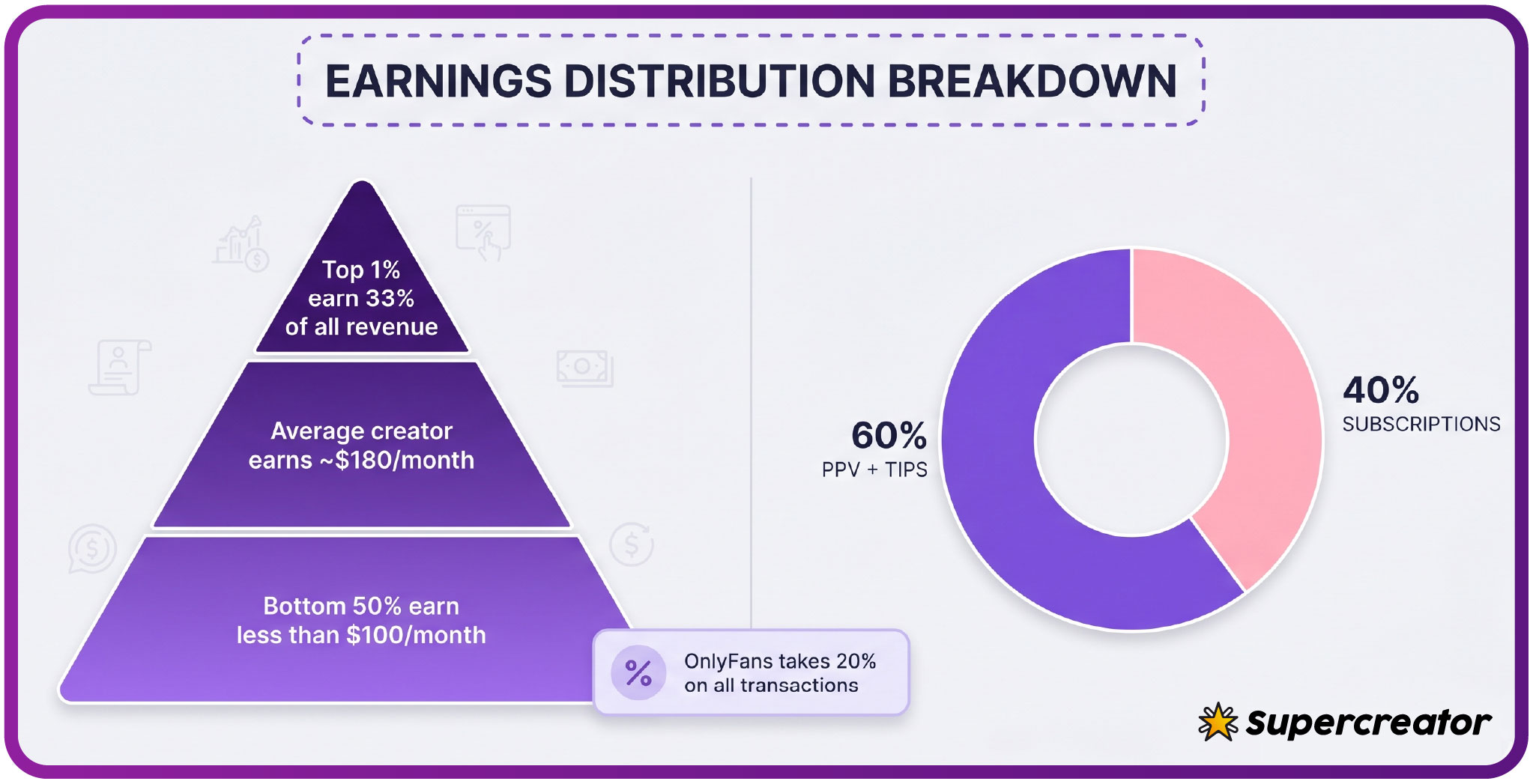
The platform takes a 20% fee on everything, including subscriptions, tips, and pay-per-view, so the creator keeps 80%. Plan for these monthly costs:
- One paid subscription at the low end, around $4.99.
- One mid-range subscription, roughly $5 to $10.
- Tips or pay-per-view unlocks, which vary by month.
- Renewal for any page you keep past the first month.
Keep the total inside a range you can explain if a statement is ever seen. One subscription plus occasional tips is easier to account for than five renewals at once. If a creator raises the subscription price, auto-renew stops and existing access lasts until the current paid period ends, so a price change is also a natural moment to review what you keep.
If someone else uses your account
Shared machines sometimes mean shared logins, whether by choice or by accident. If another person has been using your account on the same device, change the password first from a device only you control. That single step ends any session they can still resume.
After the password change, add these protections:
- Two-step authentication on the account, with codes going to your own phone.
- An email address that only you can open, checked on a separate device.
- Removal of saved logins and autofill entries from every shared browser profile.
- A review of active subscriptions against your own payment records.
- A fresh password that is not reused on any other site.
Two-step authentication is the strongest single addition here, because a stolen password alone stops being enough. Set it up before you tell anyone the password has changed, and confirm the recovery codes are stored somewhere private. The free unlock page for OnlyFans is a common entry point for new users, so treat any link you receive with the same caution you would apply to a banking page.
A short routine before logging off
A closing routine removes the traces that survive a logout. It takes under a minute once the steps become habit, and it covers every store described above in a single pass.
- Log out of the site rather than closing the tab.
- Clear history and autofill entries in that profile.
- Lock any password manager vault.
- Close the profile window completely, not just the tab.
- Check the downloads folder for anything saved by mistake.
Avoid these common mistakes, which undo most of the work above:
- Relying on private mode while leaving autofill enabled.
- Saving the card at checkout because it is faster next time.
- Leaving the profile open in the background overnight.
- Using the same password on the site and on your email.
Run the routine a few times and it stops feeling like a checklist. The onlyfans free unlock approach some readers use for free pages changes nothing about device privacy, because the traces live in the browser, not in the price. BestOnlyFans lists both free and paid pages, and the free ones still require the same care with cookies, alerts, and cards.
FAQ
Does private browsing hide my OnlyFans activity on a shared computer?
No. Private mode stops new local history entries after the window closes, but it does not isolate cookies between sessions or remove saved logins, downloads, or notifications that already exist on the machine.
Can I use OnlyFans on a shared computer without saving a card?
Yes. Decline every offer to save the card and enter the number manually for each payment. Paid subscriptions run from $4.99 to $49.99, with most pages between $4.99 and $15 and an average around $5 to $10.
What happens if a creator raises the subscription price?
Auto-renew stops when the price changes, and existing access lasts until the current paid period ends. That gap is a good moment to decide whether the page is still worth keeping.
How much does the platform take from each payment?
The platform fee is 20% on everything, including subscriptions, tips, and pay-per-view, so the creator keeps 80%. The fee does not change based on how the payment is made.